![Roofers [location]](https://barrowroofing.co.uk/wp-content/uploads/2023/08/TheRoof-smith-logo-84x70-1.png)

[location] Commercial Roofing Contractors
Industrial And Commercial Roof Installation Repairs & Maintenance
Request A Free Quote
Roof leaks shouldn’t be a concern for a warehouse, or any other business.
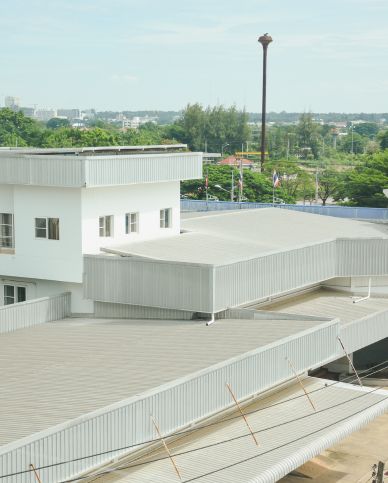
As with a domestic roof commercial roofing systems are designed to protect your property from the elements. Commonly, commercial roofing systems are made of single-ply (TPO. PVC. EPDM), or concrete and modified bitumen and built up roofing system, tar & gravel, and many other materials. A commercial roof has more options than a residential one, so you want to make sure that you find a trusted local contractor with extensive commercial roofing expertise.
No matter if your roofing needs are for commercial roof installation or repairs, or gutter installation, our commercial roofing professionals can assist you. They strive to solve your roof problems efficiently and quickly. They are available to help with any type of roof repair, large or small.
Different Types Of Commercial Roofing Systems
Commercial Roof with Built-up (BUR).
BUR roofing, which is the standard tar & gravel roof system, is made from multiple layers. This improves the roof’s durability. This roof is low-slope and an excellent choice for those who need a durable and cost-effective commercial roof.
Metal Commercial Roofing Systems
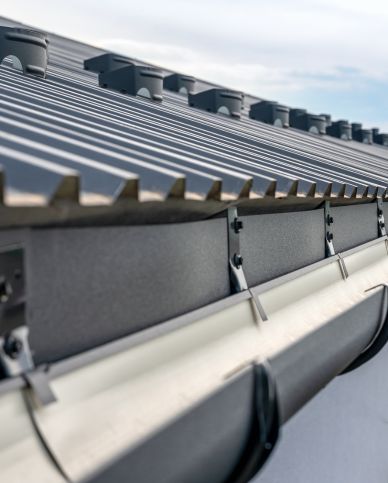
Another popular commercial roof type is the metal roof. They are sturdy and fire resistant and come in many materials like:
- Metal tile sheets
- Galvanized corrugated steel
- Stainless Steel
- Steel with stone coating
- Silicon-coated steel
- Copper, aluminum aggregates
- Zinc
- Tin
and more
Many layers of protection are added to protect the metal from corrosion and damage caused by sunlight and other environmental factors. You can also use them to make your property more sustainable.
Modified Bitumen (ModBit) Commercial Roof
Mod-Bit roofs are made of layers of bitumen with reinforced roof fabrics, and other materials. They are easy to maintain and have an improved tensile value than other commercial flat roofs. Mod-bit roofs can be attached as two-ply systems in order to offer maximum protection and stability. These roofs are great if there is to be a lot of activity on the roof.
Ethylene Propylene Diene Terpolymer (EPDM) Commercial Roof
EPDM is a rubber roofing system that is made of one-ply rubber material. This rubber material is versatile, durable, and easy to maintain. The EPDM insulation protects against heat during summer and cold during winter, which will help you save money on heating and cooling your building.
They can be installed quickly and offer strong resistance to ultraviolet and ozone radiation. They also come with the added benefits of being:
- Resistant to certain solvents, acids, or alcohol
- Have flexibility in colder temperatures
They also have reflective properties which can reduce your cooling costs.
Roofs made of Poly Vinyl Chloride, (PVC), or Thermoplastic Polyolefins (TPO).
These roofs are ideal for restaurants, hotels, or other businesses that emit oils from their ventilation systems. These roofs are light and reflective. They also resist most chemicals, punctures and UV rays.
Commercial Green Roofs
These roofs are becoming more popular in recent years. They can be a long-lasting option for your commercial property. They are attractive eco friendly, as well as being more efficient and able to manage water and drainage.
Our Teams Are Able To Handle Any Type Of Roof Issue
Whether Its Commercial Or Residential
Commercial Roofing Inspection And Maintenance
An inspection of your commercial roof can detect potential problems early and prevent roof damage, which helps to avoid costly repairs in the future. This inspection covers areas such as flashing, roof membranes, vents and decking. It also includes drainage pipes, down spouts and gutters.
Proper maintenance and regular inspections are essential for extending the life of your commercial roof. Commercial roof maintenance includes:
- Getting rid of all debris
- Repair any leaks, water damage or tears
- Flashing and roofing HVAC System repairs
- Ensuring that the roofing material remains in good condition.
Commercial Roof Installation And Replacement
The cost of a commercial flat roof installation will vary depending on the type of roofing material you choose. Each roofing material offers its own benefits and installation techniques.
- Metal Commercial Roof – The installation of a metal commercial roof will require the use of a metal framework that is attached to your building using fasteners. The process involves attaching the steel sheet of the correct thickness and type over the top. Finally, you secure it with screws or bolts. This will seal your roof and ensure it lasts for at least fifty years.
- BUR Commercial Roof – BUR roofing installation requires a more complex process than that of metal roof. This type of commercial roof requires layers of alternate materials (rubber, asphalt, tar, etc.). Rubberized asphalt is applied to the bottom layer and then covered with tar and gravel. Your BUR roof will be strengthened by the bottom layer, commonly known as an underlayment membrane (often made of felt).
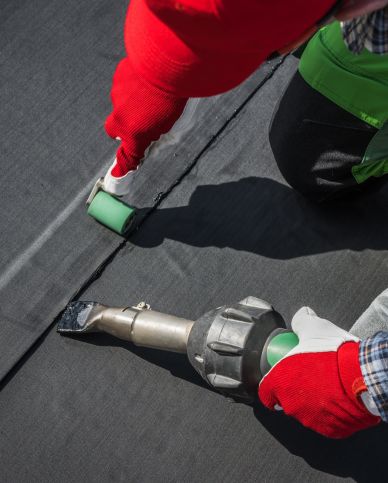
- EPDM Commercial Roof – EPDM commercial roof installation takes less time than BUR or metal roofing systems. The material is usually available in rolls from a manufacturer. After you have laid the material over your building frame, you make sure that each seam is sealed with a special seam adhesive. This adhesive provides a waterproof seal at the seams. This type of roofing is the easiest to replace.
- PVC Commercial Roof – For a PVC roof installation you’ll need felt paper to be laid over the existing building surface. You will attach this felt to your building’s surface using staples, nails or screws. Next, place sheets of protection against UV rays on top. You can then apply the next layer, or polyvinyl chloride (PVC), using the same process.
- TPO Commercial Roof – TPO roofing installation can be more difficult than the other traditional roof installations. TPO commercial roof installation starts with applying adhesive and sealant over the desired area. The next step is to apply your commercial waterproof membrane, or sheet, and then install the TPO material on top. Layering is similar to BUR but requires fewer steps.
- Green Commercial Roof – The green roof installation is unique because it does not require additional structures or frames on your building for this type of roofing. This process can include plants or additional insulation layers. However, it is more complicated because drainage systems must be installed properly to allow water to flow away.
Last but not least, commercial roofs can require more than one type or roofing material. You can mix a metal roof with EPDM to create an impervious, stronger roof. For your commercial roof to last its lifetime, it should be installed correctly and well-maintained.
Commercial Roof Repair
Commercial roof repairs can be an affordable way to prolong the roof’s life and prevent a total roof replacement. It is possible to extend the lifespan of your roof without having to replace it. You should choose durable high quality materials and have qualified roofers, who are insured and licensed to repair your roof.
Our Teams Are Able To Handle Any Type Of Roof Issue
Whether Its Commercial Or Residential
Commercial Roofing FAQ
Why do commercial buildings have flat roofs?
Flat roofs generally cost less than sloped roofs to install so that companies can keep construction expenses down. They cost less because there's less surface area and they're much easier to install since workers can walk safely across its surface.
What is the most common type of commercial roof?
Metal roofs are the most popular type of commercial roof due to its 40 - 60 year lifespan. They are strong and resistant to fire and can be made in a variety of materials, some even come with integrated solar or integrated snow removal systems. The metal usually have various layers of protection to prevent it from rusting or being damaged by sun exposure.
How thick is a commercial roof?
The most common thickness is probably 60 mils. (1 mil is equal to 0.001 inches. So, a 60 mil commercial roof is 0.06 inches thick)
How are BUR commercial flat roofs constructed?
BUR, (Built-Up Roofing) commercial roofs are constructed from a continuous & semi-flexible membrane that is made of felt or fabric layers. (plies). The plies are alternated with layers of other asphalt based materials such as hot tar/bitumen and aggregate. That is the reason why they are sometimes referred to as "tar and gravel" roofs.
What is a flat commercial roof made of?
Single-Ply Synthetic Membranes (TPO, PVC, and EPDM) Thermoplastic Olefin (TPO), Polyvinyl Chloride (PVC), and Ethylene Propylene Diene Monomer (EPDM) are affordable materials for commercial flat roof types contractors highly recommend.
What is PVC roofing?
PVC Roofing is made from polyvinyl chloride and is a great single-ply roofing solution. It's made from a lower percentage of oil and petroleum than thermoplastic polyolefin (TPO) or ethylene propylene diene terpolymer (EPDM).
What is the difference between TPO and EPDM?
TPO roofing reflects sunlight, allowing commercial air conditioners to work more efficiently; whereas EPDM has a dark surface, which in summer conditions will absorb heat, forcing cooling systems to work overtime. TPO offers reduced cooling costs and energy savings for facilities located in warmer climates.
What is better TPO or PVC?
While PVC offers better resistance to puncture and weathering, TPO (like PVC) is recyclable and environmentally friendly. Its reflective surface reduces UV radiation and helps with energy efficiency.
What is the best material to use on a flat roof?
EPDM Membranes is quite possibly the best flat roofing membrane as it is a relatively low-cost flat roof material that offers a number of significant advantages. Clean, straightforward installation, incredible strength, a long lifespan, and a smart finish combine to make EPDM membranes a difficult one to beat.
What is the difference between EPDM and PVC roofing?
The key difference between EPDM and PVC is that the EPDM is a synthetic rubber, which is synthesized from petroleum byproducts whereas, PVC is a thermoplastic, which can be melted down at high temperatures and thus, acquiring mouldable properties and can be cooled again to gain back the solid form.
Other areas near we cover include:
Our Teams Are Able To Handle Any Type Of Roof Issue
Whether Its Commercial Or Residential